
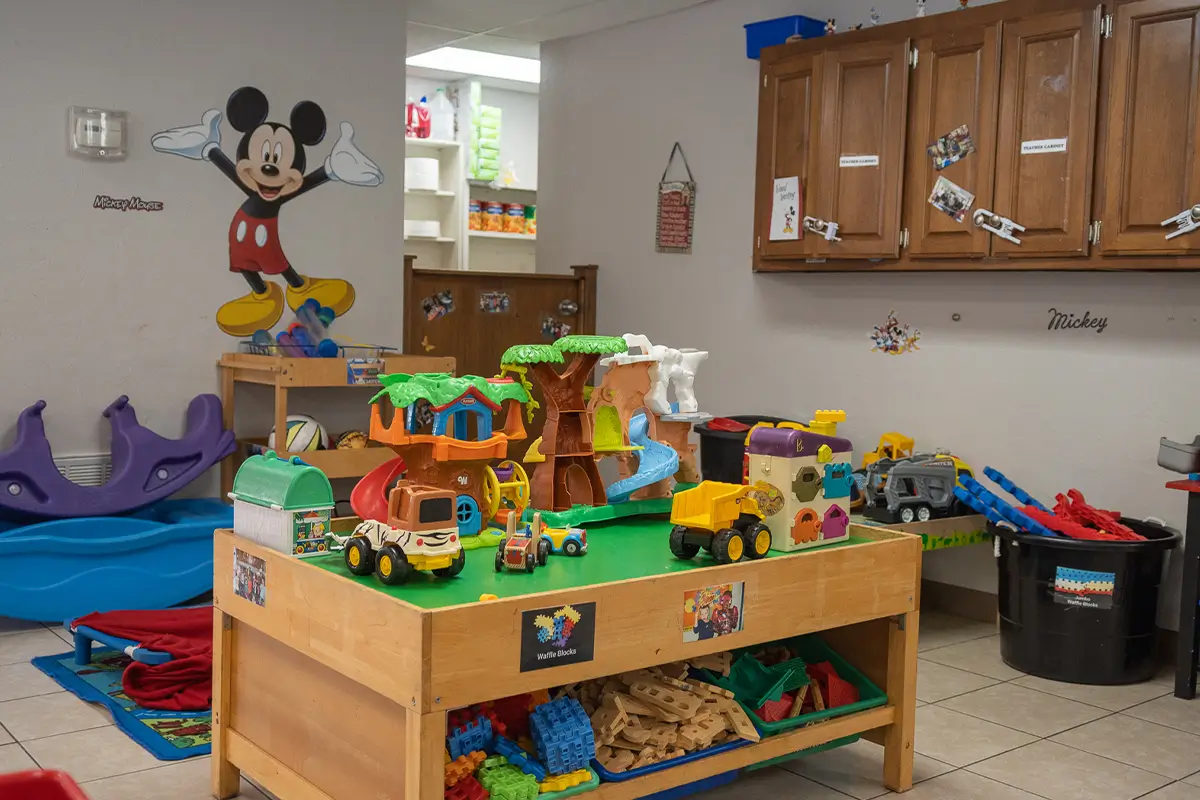
Play-based learning is an approach to early childhood education that uses play as the foundation for building academic, social, emotional, and physical skills. Instead of relying only on worksheets or formal instruction, children learn through hands-on experiences that encourage exploration, creativity, and problem-solving. When you’re comparing the best daycares near me, understanding how a program incorporates play-based learning can help you identify an environment that supports your child’s development through meaningful, hands-on experiences in child care.
Play vs. Play-Based Learning
Every child plays, but play-based learning goes a step further by giving everyday activities a developmental purpose. Children still build, pretend, create, and explore, but caregivers intentionally guide those experiences toward age-appropriate milestones.
- A child stacking blocks may be developing early math concepts, hand-eye coordination, and problem-solving skills without realizing it.
- A pretend grocery store might build language skills, cooperation, and imaginative thinking.
The activity still feels like play, but each experience is intentionally designed to support a child’s development.
How Play-Based Learning Works
Play-based learning takes different forms depending on a child’s age and developmental stage. Throughout the day, children typically move between a mix of activities:
- Free Play: Children choose their own activities with minimal direction, building creativity, independence, and decision-making.
- Guided Play: Caregivers introduce materials, ask open-ended questions, or gently steer exploration while children stay in control of the activity.
- Structured Play: Children take part in planned experiences, such as group games or art projects, that provide learning within a supportive framework.
Rather than treating learning and play as separate categories, this approach lets one reinforce the other throughout the day.
The Benefits of Play Based Learning
The benefits of play based learning go well beyond keeping children busy. Through purposeful play, children build the thinking, communication, social, and physical skills they need as they grow and prepare for future learning.
- Cognitive Development: Sorting, building, comparing, and experimenting help children develop early math and science thinking as they figure out how things work through trial and error.
- Language Development: Storytelling, pretend play, and shared reading expand vocabulary and give children practice putting their ideas into words with confidence.
- Social and Emotional Development: Playing alongside other children teaches turn-taking, conflict resolution, and cooperation, while also building independence and self-confidence.
- Physical Development: Building, climbing, drawing, and moving through play-based activities strengthen both fine and gross motor skills, laying groundwork for future physical activity.
The Role of a Daycare Provider
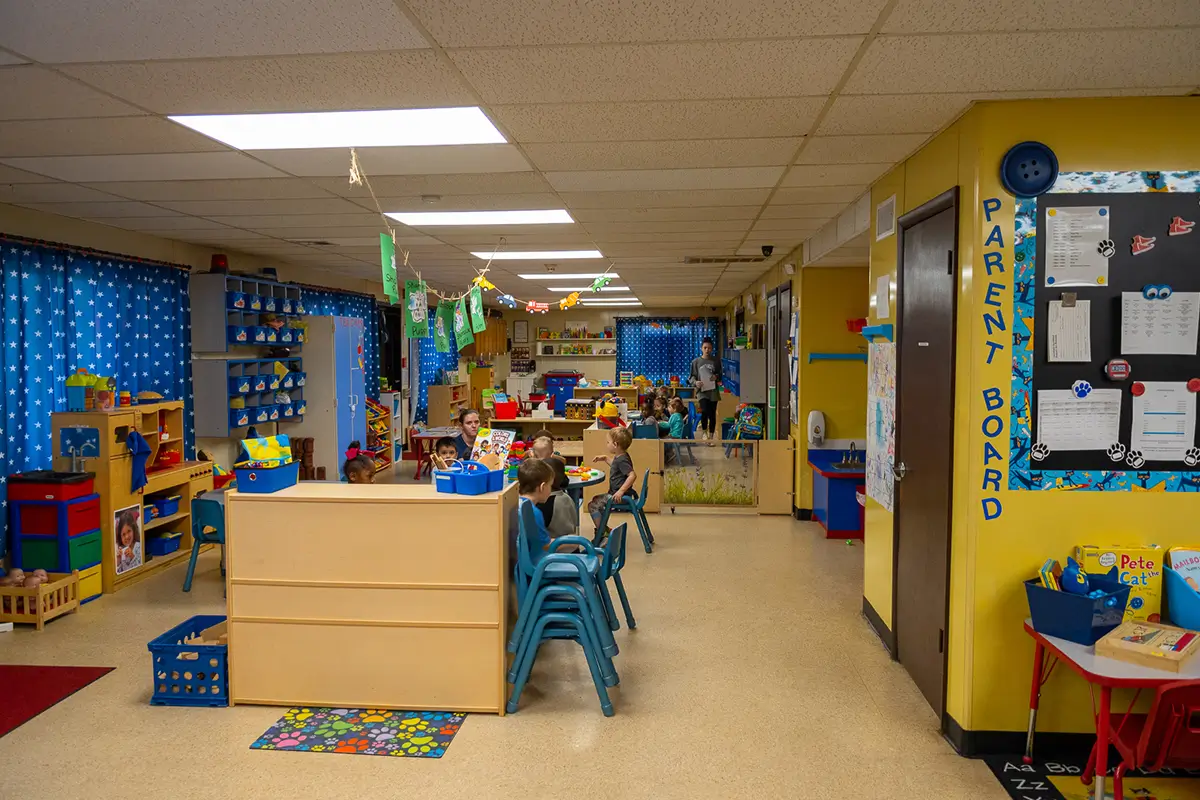
A quality daycare provider does more than supervise children while they play. Caregivers observe each child’s interests, introduce new ideas, and create opportunities that build on what a child is already curious about.
At Child Care Inc., our Early Learning Matters (ELM) curriculum is built around each stage of development, giving caregivers a structured framework for age-appropriate activities that support real milestones. As children grow from infancy to preschool, activities evolve to support new developmental milestones while encouraging the curiosity that makes learning meaningful.
How to Recognize a Quality Play-Based Program
Not every program that advertises “play-based learning” applies it the same way. As you evaluate a daycare provider, look for a few specific signs that play is being used with intention:
- Clearly defined learning areas for reading, art, dramatic play, building, and sensory exploration.
- A daily schedule that balances structured activities with child-led discovery.
- Caregivers who actively engage by asking questions and encouraging critical thinking, rather than just supervising.
- A curriculum tied to developmental milestones, not just a rotation of toys.
Touring a classroom in person is one of the best ways to see whether children appear genuinely engaged, and whether caregivers are actively part of the play rather than standing off to the side. Before your visit, reviewing questions to ask during a daycare tour can help you evaluate how play-based learning is incorporated into the program.
Frequently Asked Questions
Is play-based learning the same as unstructured free time?
No. Free play is one part of it, but play-based learning also includes guided and structured activities designed around developmental goals. The best daycares near me stay actively involved by asking questions and introducing new challenges.
At what age does play-based learning start?
It can begin in infancy, as babies explore sounds, textures, and cause-and-effect through their surroundings. Activities become more advanced as children grow, matching each stage of development.
How do I know if a daycare provider’s play is actually purposeful?
Ask how your daycare provider plans activities around developmental goals, and watch how they interact with children during a tour. Purposeful play looks different from a room full of toys with no direction behind it.
Does play-based learning prepare kids for kindergarten?
Yes. Play-based learning helps children build early literacy, math, communication, and problem-solving skills through hands-on exploration and purposeful activities. Along the way, children also develop self-regulation, persistence, confidence, and independence, all of which support a smoother transition to kindergarten.
Play With a Purpose at Child Care Inc.
Every child learns differently, so the right environment depends on their age, personality, and interests. If you’re weighing the best daycares near me, ask how play-based learning is incorporated into daily routines. The answer can reveal a great deal about how a program supports children’s development from infancy through school age. Likewise, pay attention to how caregivers interact with children, whether activities encourage curiosity, and whether children seem genuinely engaged rather than occupied.
At Child Care Inc., our Early Learning Matters curriculum is designed to help children build confidence, curiosity, and age-appropriate skills through purposeful, hands-on learning experiences. If you’d like to see play-based learning in action, contact our team to schedule a tour and learn more about our programs.